
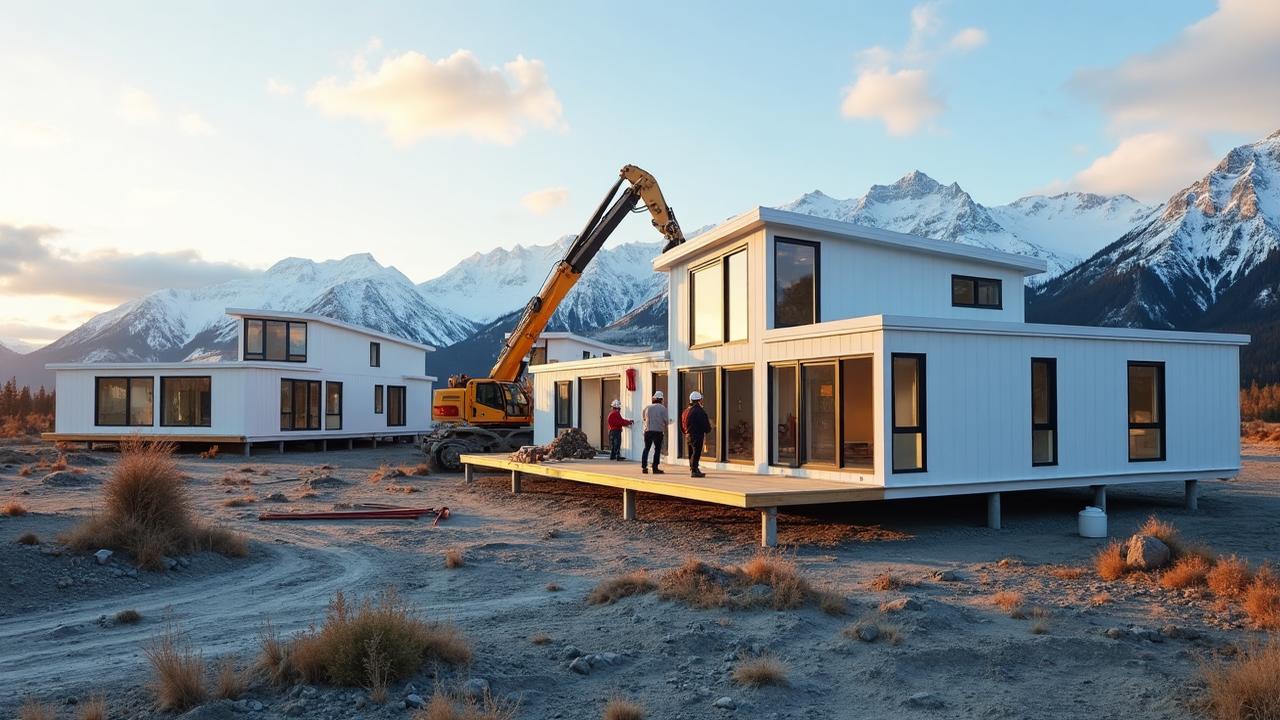
Modular Housing Canada: Inside PM Carney’s "Build Canada Homes" Strategy
Modular housing is no longer just an alternative—it is the central pillar of Canada's new national housing strategy. With the launch of the Build Canada Homes agency, the federal government has fully embraced factory-built construction to solve the affordability crisis.
But what exactly is it, and how does Prime Minister Mark Carney’s new $5 billion plan impact homeowners, developers, and renters?
What is Modular Housing?
Modular housing is a modern construction method where homes are built in sections (called modules) inside a climate-controlled factory. Once complete, these modules are transported to the building site and assembled in days.
Unlike traditional homes that take 6–12 months to complete, modular homes are often ready in just 3–4 months. Because factory work happens simultaneously with on-site foundation preparation, the total timeline from start to move-in is cut by up to 50%.
Prime Minister Carney’s Vision: The "Build Canada Homes" Agency
Prime Minister Mark Carney—formerly the Governor of the Bank of Canada and Bank of England—has brought his economic expertise to the housing sector. His government has officially launched Build Canada Homes, a federal agency dedicated to scaling up prefabricated construction.
This is a shift from "proposing" solutions to funding them. The agency is designed to turn housing from a national crisis into an economic engine.
The "Build Canada Homes" Mandate
The new agency is rolling out a bold strategy to get homes built faster:
Massive Federal Investment: Committing $5 billion to build 100,000 affordable modular housing units over the next 5 years.
Regulatory Reform: Cutting project approval times from 18 months down to 6 months for factory-built projects.
Prefabricated Home Financing: Offering new tax credits and grants to manufacturers who open factories in high-unemployment areas.
Public-Private Partnerships: Teaming up with non-profits (like Anhart) and private developers to deploy rapid housing on public land.
Key Benefits of Modular Construction
Why is the government betting so big on modular? The data supports the shift.
1. Unmatched Speed and Efficiency
Rapid Housing Construction: Modular builds are 30–50% faster than traditional wood-frame construction.
Weather Immunity: Factory work never stops for rain, snow, or freezing temperatures—a critical advantage in the Canadian climate.
Parallel Processing: Site prep and building construction happen at the same time.
2. Significant Cost Advantages
Lower Costs: Precision manufacturing reduces material waste by 80% and labor costs by 15–20%.
Budget Certainty: With controlled indoor environments, there are virtually no surprise cost overruns.
Affordability: These savings are passed down, cutting total home costs by 15–25%.
3. Quality and Sustainability
Built to Last: Modules are built to withstand transport, making them structurally stronger than many site-built homes.
Green Building: Factories generate 80% less waste, and new units are net-zero ready with lower carbon footprints.
Modular Housing Success Stories Across Canada
The "Build Canada Homes" initiative is scaling up models that are already working.
British Columbia Leads the Way
BC has been the national model for this strategy, with over $200M+ invested since 2017. Cities like Vancouver and Victoria have successfully deployed over 1,200 units, proving that modular solutions can be both beautiful and effective.
Vancouver: Private studios with full kitchens and bathrooms are being deployed for supportive housing, move-in ready in just 12–18 months.
Anhart’s Role: Organizations like Anhart are at the forefront, managing portfolios that prioritize community support and long-term stability.
Ontario & Alberta
Toronto: Modular pilots have shown high retention rates, with 85% of residents remaining housed for 2+ years.
Alberta: Leveraging lower land costs to deploy fast disaster relief and family housing.
The Manufacturing Revolution: High-Tech Homes
Forget the "cookie-cutter" prefab stereotypes of the past. Today's modular factories are high-tech assembly lines utilizing:
3D Design Software: Ensuring millimeter-perfect floor plans.
CNC Robotics: Automated cutting for precision and speed.
Custom Finishes: From quartz countertops to smart-home tech, buyers can customize layouts, flooring, and multi-story designs (up to 10+ floors).
Ready to Explore Modular Housing?
The "Build Canada Homes" era has begun. Whether you are a developer, a municipality, or a family looking for affordable options, the time to build is now.
Anhart is leading modular innovation in British Columbia.
Check out our Tiny/Modular Homes for sale
Updated: November 2025. Programs and grants are subject to regional availability. Visit Anhart.ca for the latest application guides.